



Skip to the main content.

13 min read

Valuation Differences Between Fee-Only And Commission-Based Advisory Firms

Valuation Differences Between Fee-Only And Commission-Based Advisory Firms

Two advisory firms can generate the same annual revenue and still produce different valuation outcomes. The reason often comes down to revenue mix: how the firm earns income, how predictable that income is, and how easily it can transfer to a buyer.

Fee-only, fee-based, and commission-based advisory firms each create different valuation questions. Buyers and lenders look beyond total revenue to assess recurring revenue quality, cash flow durability, client transferability, buyer risk, conflict-of-interest concerns, and forecast confidence.

The distinction matters because advisor compensation is not evenly distributed across the industry. Cerulli reports that asset-based fees represent 72.4% of financial advisor compensation, while commission-based revenue represents 23% of average advisor revenue. Cerulli also projects that 77.6% of the wealth management industry will operate on a fee-based model by 2026. These numbers show why valuation providers pay close attention to AUM-based fees, commission revenue, trail revenue, financial planning fees, and other compensation sources when assessing firm value.

Still, valuation does not depend on compensation structure alone. A fee-only financial advisor with weak client retention, high overhead, or heavy advisor dependency can face valuation pressure. A commission-based financial advisor with strong trail revenue, documented client relationships, and transferable revenue can still command buyer confidence.

This guide covers:

  • How fee-only, fee-based, and commission revenue affect advisory firm valuation outcomes

  • Which revenue mix details buyers and valuation providers usually review first

  • How conflicts, transferability, margins, and forecasts can affect firm value significantly

  • What documents should advisors prepare before requesting a valuation consult today

P.S. Revenue mix affects how buyers and lenders evaluate advisory firm value. Advisor Legacy provides Business Valuation for Financial Advisory Practices that generate 70% or more of their revenue from AUM-based fees. For practices with 30% or more income from insurance and annuities, along with AUM income, Business Valuation Plus offers an expanded valuation option. Book a valuation consult to see how your revenue model affects buyer confidence and firm value.

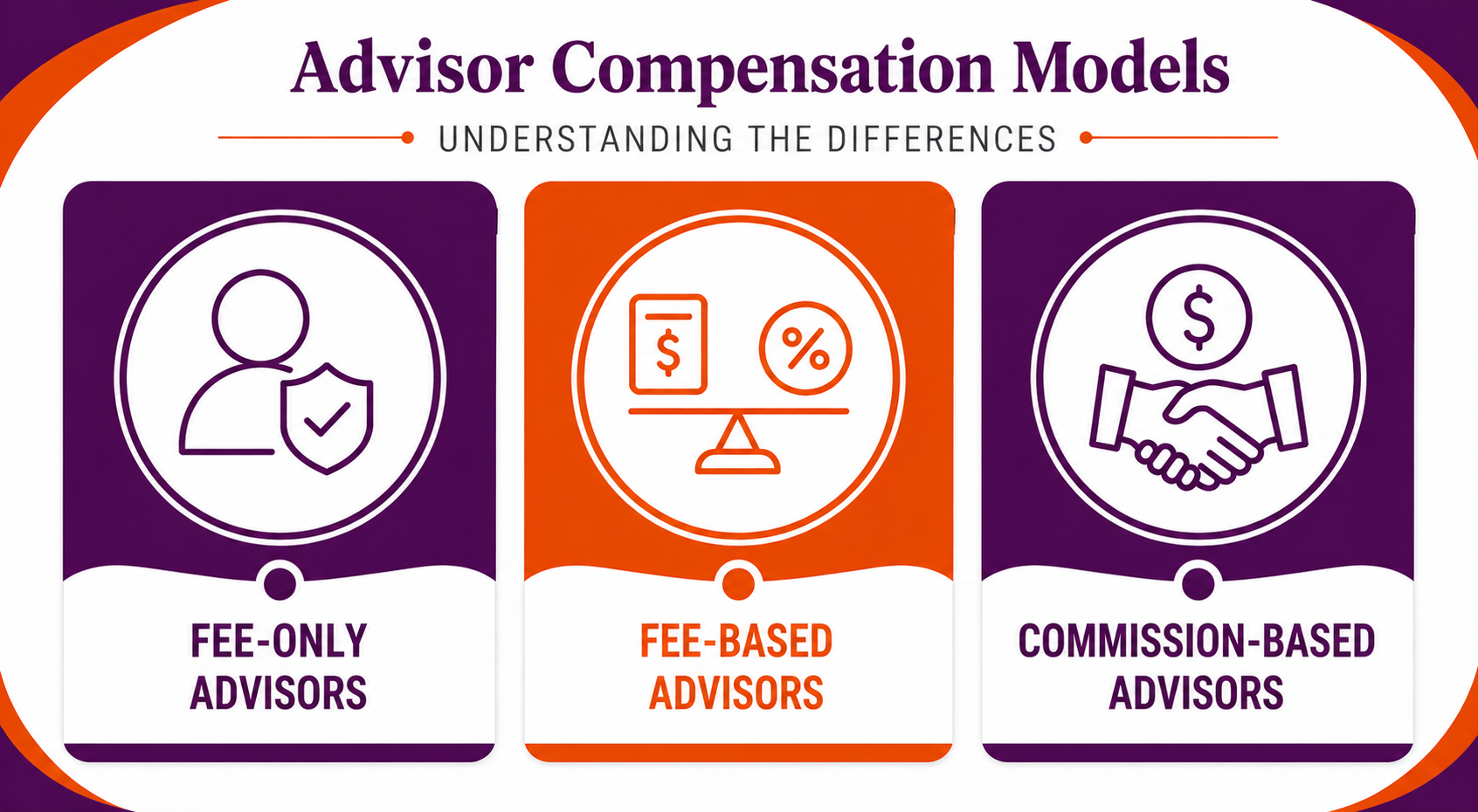
Understanding The Differences Between Fee-Only, Fee-Based, And Commission-Based Advisors

Understanding the differences between fee-only, fee-based, and commission-based advisors helps clarify why similar firms can receive different valuation treatment. Each model affects how advisors earn income, how buyers view revenue durability, and what risks or documentation may matter during a valuation.

Differences Between Fee-Only, Fee-Based, And Commission-Based Advisors

  • A fee-only advisor earns income only from client-paid fees. These fees may include assets under management fees, flat fee financial planning, hourly advice, retainer fees, or other direct financial planning services. A fee-only financial advisor does not earn commissions from selling financial products. This structure can reduce potential conflicts of interest because the advisor is not paid by product sponsors for product placement.

  • A commission-based advisor earns income when clients purchase financial products or services. This may include annuities, insurance products, mutual fund products, or other investment products. Commission-based compensation may include upfront commissions, renewal commissions, trail revenue, or other product-based compensation. They may earn a higher commission on some products than others, which can create perceived or actual conflicts of interest if the compensation structure is not clearly disclosed.

  • A fee-based advisor may earn both client-paid advisory fees and commission-based compensation. Fee-based advisors may charge financial advisory fees for assets under management or financial planning services while also receiving commissions from financial product sales. Because the fee-based model combines both approaches, buyers and valuation providers usually want detailed documentation showing how the advisor is paid, which revenue is recurring, which revenue is transactional, and how potential conflicts of interest are disclosed.

Revenue Recurrence, Cash Flow Quality, And Forecast Confidence

Revenue recurrence is one of the first issues buyers review when comparing fee-only, fee-based, and commission-based financial advisor practices. Recurring revenue usually creates stronger forecast confidence because buyers can estimate future cash flow with more clarity.

AUM-based fees, retainers, recurring financial planning fees, trail revenue, and renewal income may all support valuation when they are consistent and well-documented. One-time commission revenue can still have value, but buyers may apply more conservative assumptions if future income depends heavily on new product sales.

Revenue Model Valuation Impact
Fee-Only (AUM-Based) Recurring revenue tied to assets under management can create predictable cash flow, support buyer confidence, and improve forecast quality when client retention is strong and the fee schedule is clear.
Fee-Only (Flat Fee or Retainer) Flat fee, retainer, hourly, or financial planning fee revenue can be durable, but buyers may review renewal rates, service delivery costs, and whether the advisor charges enough to protect margins.
Commission-Based (Product Sales) One-time commission revenue from selling financial products can create revenue variability and lower forecast confidence unless the advisor can show repeatable sales activity or related recurring income.
Commission-Based (Trail Revenue) Trail revenue from mutual fund holdings, annuities, insurance products, or other commission-based products can support value when retention history, product mix, and transferability are documented.
Fee-Based (Mixed Model) Fee-based advisors may combine advisory fees, financial planning fees, AUM-based fees, and commission-based compensation, so buyers usually evaluate each revenue stream separately.


Buyers and lenders use these revenue patterns to model financial future cash flow, assess debt service capacity, and determine whether the practice can support acquisition financing. Registered investment advisors, certified financial planners, and other financial professionals may benefit from stronger buyer confidence when revenue durability, client retention, and transferability are easy to verify.

Assets Under Management And Fee Durability

Assets under management often play a major role in financial advisor valuations because AUM-based fees can create recurring revenue. A fee-only financial advisor who charges a percentage of assets under management may benefit from a revenue model that scales with client assets, market performance, and new client contributions.

Still, AUM revenue is not automatically low risk. Buyers review client demographics, account size, withdrawal patterns, retirement planning needs, client concentration, investment strategy, and retention history. A fee-only advisor may face valuation pressure if a large share of AUM belongs to aging clients, a small group of households, or clients with high distribution needs.

Fee-based advisors may also manage assets under management while earning additional income from commission-based products. This can strengthen total revenue, but buyers need to understand how much revenue comes from advisory fees and how much comes from product-based compensation

Read Next: Understanding Valuation Multiples for a Financial Advisor Practice

Commission Revenue, Trail Revenue, And Transferability Risk

Commission revenue can affect valuation because some commission-based compensation is harder to forecast and transfer than advisory fee revenue. A buyer evaluating a commission-based financial advisor practice will review whether revenue depends on product access, broker-dealer relationships, licensing requirements, client consent, or the seller’s personal influence.

One-time commissions from selling financial products may be discounted if future revenue depends on new sales activity. Trail revenue from existing policies, annuities, mutual fund holdings, or other investment products can reduce buyer concern when the buyer can assume servicing responsibilities and maintain client relationships.

The main valuation question is whether commission-based compensation can continue after the current advisor exits. If income depends heavily on the seller’s personal sales activity, the buyer may apply a higher risk adjustment. If income is supported by renewal revenue, trail revenue, product-level records, and a clear transfer path, the revenue may be easier to defend during valuation.

Fee-Based Firms And Mixed Compensation Structures

Fee-based advisors may combine fee-only and commission-based revenue, creating a hybrid compensation structure that requires more explanation during valuation. Buyers and lenders want to understand how much revenue comes from assets under management, how much comes from financial product sales, and how much comes from financial planning services or other fee arrangements. A fee-based financial advisor should be able to explain how the advisor charges clients, how the advisor earns commissions, whether the advisor earns higher commission rates for certain financial products, and how potential conflicts of interest are disclosed.

  • AUM Revenue Percentage: Show the percentage of total revenue derived from assets under management so the valuation provider can compare the firm to fee-only benchmarks.

  • Commission Revenue Breakdown: Separate one-time commissions from trail revenue and document which products generate ongoing income, which require annual renewals, and which depend on new sales activity.

  • Fee-Based Model Documentation: Provide client agreements that clarify whether the advisor charges fees, earns commissions, or uses both methods.

  • Compensation Structure Transparency: Document how the advisor is compensated, how the advisor is paid by product sponsors or custodians, and whether the advisor earns higher commission rates for certain financial products or services.

Conflicts Of Interest, Fiduciary Positioning, And Buyer Perception

Conflicts of interest can influence buyer perception, especially when a firm earns commission-based compensation. Buyers want to know whether clients understand how the advisor is paid, whether the advisor’s financial advice aligns with each client’s best interest, and whether disclosures are clear.

Fee-only advisors often position themselves as fiduciaries who act in the client’s best interest without earning commissions from selling financial products. This positioning can strengthen buyer confidence when the advisor also has documented fiduciary processes, compliance records, and client communication practices.

Commission-based advisors may operate under a suitability standard in some contexts, depending on registration, licensing, product type, and regulatory framework. This can introduce buyer concerns if the advisor earns higher commission rates for certain products. Fee-based financial advisors who combine both models must show how they manage potential conflicts of interest, disclose compensation structure, and align recommendations with the client’s financial situation, financial goals, long-term financial goals, and long-term financial needs.

Profitability, Margin Profile, And Service Delivery Load

Revenue model affects profitability and margin profile, which directly influence firm value. A firm can have strong revenue but a weaker valuation if service delivery costs, staffing needs, compliance costs, or owner dependency reduce sustainable cash flow.

Fee-only advisors who charge a percentage of assets under management may achieve stronger margins when service delivery is scalable, technology is efficient, and the advisor is not required to provide unlimited comprehensive financial planning for every client. Commission-based advisors who earn income by selling financial products may face lower margins when product sales require extensive client meetings, compliance documentation, and ongoing servicing without recurring revenue.

  • Service Delivery Costs: Fee-only advisors who provide comprehensive financial planning, retirement planning, and wealth management services may incur higher labor costs, which can reduce profitability unless fees are structured to cover service delivery load.

  • Product Sales Effort: Commission-based advisors who earn income from one-time product sales may spend significant time prospecting, presenting, and closing transactions without generating recurring revenue, which can weaken cash flow durability.

  • Trail Revenue Margins: Commission-based advisors who earn trail revenue from mutual fund holdings, annuities, or insurance policies may achieve stronger margins when servicing requirements are low and renewal rates are high.

  • Fee-Based Model Efficiency: Fee-based advisors may balance service delivery costs by earning both recurring fees and commissions, but buyers will review whether the compensation structure creates operational complexity, compliance risk, or reporting confusion.

Read Next: Profitability in Financial Advisor Practices

Value Drivers By Revenue Model

Different compensation structures create different valuation questions. Fee-only, fee-based, and commission-based models can all support value, but buyers review each model through the lens of recurrence, retention, transferability, margins, and buyer confidence.

Value Driver Fee-Only Impact Commission-Based Impact
Revenue Recurrence AUM-based fees, flat fees, retainers, and recurring financial planning services can create more predictable cash flow when client retention is strong. One-time commissions may reduce forecast confidence unless trail revenue, renewal income, or repeatable product sales are documented.
Client Retention Strong retention supports value when clients remain engaged with the advisor, the financial plan, and the firm’s long-term service model. Retention risk may increase when revenue depends on product sales, personal advisor relationships, broker-dealer affiliation, or product access.
Transferability Fee-only revenue may transfer more clearly when client consent, custodian continuity, signed agreements, and service processes are documented. Commission-based revenue may require licensing, product re-enrollment, broker-dealer coordination, or client re-engagement after a sale.
Margin Profile Fee-only firms can produce strong margins when service delivery is scalable, and the advisor charges enough for comprehensive financial planning, retirement planning, and wealth management. Commission-based firms may face margin pressure when product sales require heavy prospecting, compliance work, and servicing without recurring revenue.
Buyer Confidence Fee-only fiduciary positioning may reduce perceived conflicts of interest when documentation, disclosures, and client communication practices are strong. Commission-based compensation may raise questions about potential conflicts of interest, but clear disclosures and durable trail revenue can improve buyer confidence.


Read Next: Factors That Impact Practice Value

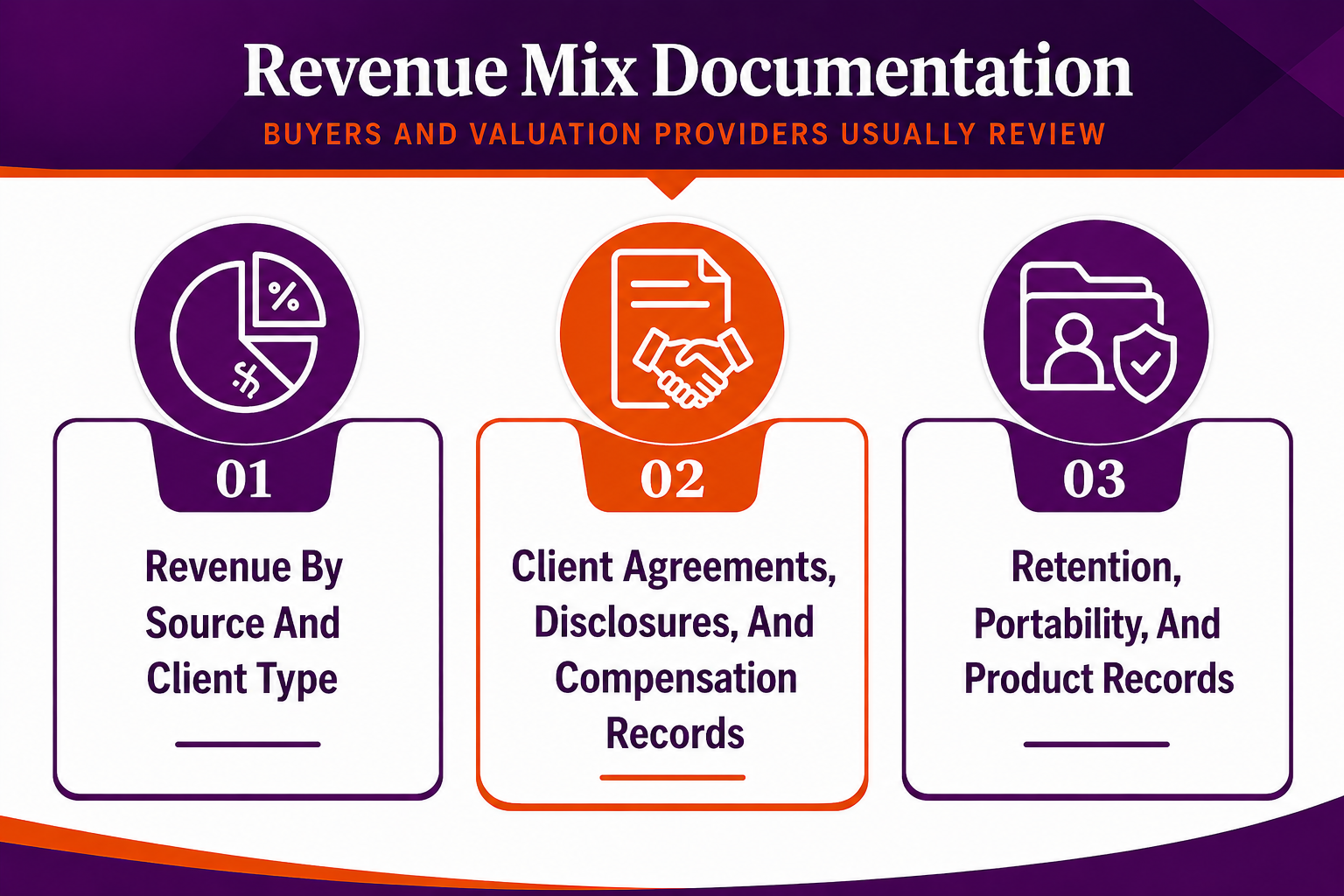
Revenue Mix Documentation Buyers And Valuation Providers Usually Review

A revenue model only supports value when buyers can verify how the income is earned, retained, and transferred. Clear documentation helps turn revenue mix from a claim into evidence, giving buyers and lenders more confidence in the firm’s cash flow, client relationships, and post-sale continuity.

Revenue Mix Documentation Buyers And Valuation Providers Usually Review

Revenue By Source And Client Type

Buyers and valuation providers want to see revenue broken down by source, client type, and durability. Fee-only advisors should document AUM revenue, financial planning services revenue, retainer income, and flat fee arrangements. Commission-based advisors should document product sales revenue, trail revenue, renewal income, and product-level revenue history.

  • AUM Revenue By Client Household: Show assets under management by client household, fee schedule, revenue contribution, and retention history.

  • Commission Revenue By Product Type: Separate mutual fund commissions, annuity sales, insurance product sales, and other commission-based products.

  • Trail Revenue Documentation: Provide trail commission history by product and client household so the valuation provider can identify recurring commission income.

  • Fee-Based Revenue Breakdown: Document how much revenue comes from advisory fees, financial planning fees, commissions, and other products and services.

Client Agreements, Disclosure Documents, And Compensation Records

Client agreements and disclosure documents help buyers verify how the advisor is compensated, how the advisor charges clients, and whether the advisor is a fiduciary.

  • Investment Advisory Agreements: Provide signed agreements that document the advisor’s fee structure, services provided, and fiduciary duty to act in the client’s best interest.

  • Form ADV Disclosures: Include Form ADV Part 2A and Part 2B to document compensation structure, potential conflicts of interest, services, and disciplinary history.

  • Commission Statements: Provide commission statements from broker-dealers, product sponsors, custodians, insurance carriers, or annuity providers.

  • Fee-Based Compensation Disclosure: Document how the advisor discloses fee-based compensation, manages potential conflicts of interest, and explains recommendations to clients.

Retention, Portability, And Product Records

Buyers also review whether client relationships and revenue can continue after a sale. This may include client retention reports, onboarding processes, policy or product servicing records, renewal history, broker-dealer transition requirements, licensing considerations, and product sponsor approvals.

For commission-based and fee-based firms, product mix and renewal assumptions matter because buyers want to know which financial products generate recurring revenue, which require annual renewal, and which depend on new sales activity. Compliance records help buyers assess disclosure quality, client complaints, regulatory risk, and whether recommendations align with client needs.

Read Next: How An Aging Client Base Hurts Your Practice Value (And What to Do About It)

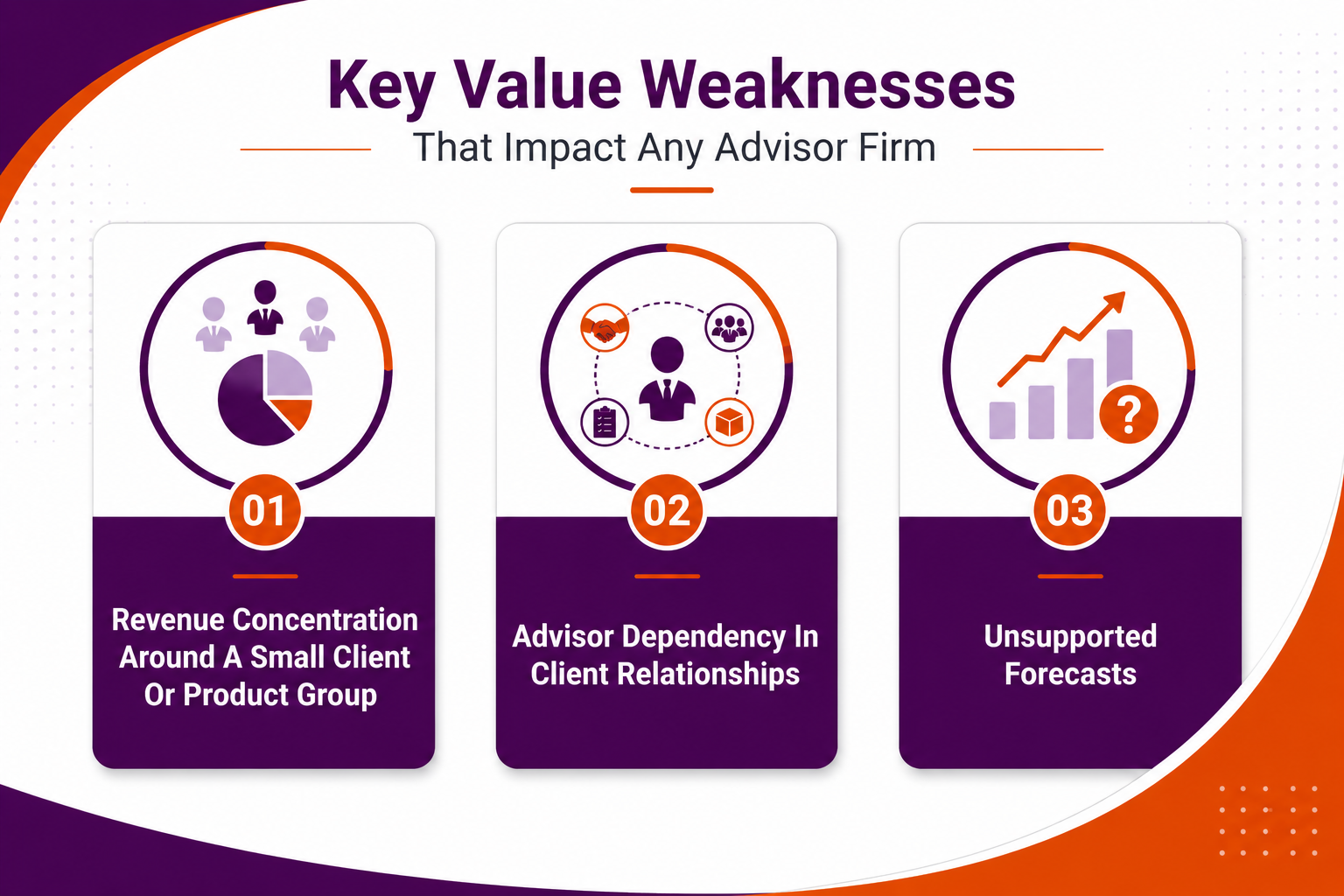
What Can Weaken Value Across Any Advisor Compensation Structure

Valuation risk is not limited to one compensation model. Fee-only, fee-based, and commission-based firms can all lose value when the business is difficult to verify, difficult to transfer, or too dependent on one advisor, client group, product, or revenue stream.

Key Value Weakness

Revenue Concentration Around A Small Client Or Product Group

Revenue concentration weakens firm value when a small number of clients, products, or referral sources generate a disproportionate share of total revenue. Buyers worry that if one large client, product sponsor, or revenue source leaves, future cash flow could decline quickly.

Fee-only advisors may face valuation pressure when a large percentage of revenue comes from a small number of client households. Commission-based advisors may face similar pressure when most income comes from one financial product, one product sponsor, or one sales strategy. Fee-based advisors should be able to show that revenue is diversified across client households, product types, and service offerings.

Advisor Dependency In Client Relationships

Advisor dependency weakens firm value when clients view the advisor as irreplaceable and may not transfer to a buyer. This risk can affect fee-only, fee-based, and commission-based firms.

Fee-only advisors who provide comprehensive financial planning, retirement planning, and wealth management services may face advisor dependency risk if clients have deep personal relationships with the advisor and no documented transition plan. Commission-based advisors who sell financial products based on personal influence, trust, or long-term relationships may face similar risk if clients are unlikely to purchase products from a new advisor.

  • Personal Relationship Dependency: Clients who view the advisor as a trusted friend or family member may resist transferring to a buyer, which increases attrition risk and reduces firm value.

  • Service Delivery Dependency: Clients who rely on the advisor for comprehensive financial planning, tax planning, estate planning, or other specialized services may not transfer if the buyer cannot replicate the advisor’s expertise or service delivery model.

  • Product Access Dependency: Commission-based advisors who sell financial products through a specific broker-dealer or product sponsor may face dependency risk if clients cannot access the same products after a sale.

  • Communication Dependency: Clients who expect frequent communication, personalized advice, or proactive outreach may not transfer if the buyer’s service model differs from the seller’s approach.

Unsupported Forecasts

Unsupported forecasts create valuation risk because buyers and lenders need to understand which income is likely to repeat. A dollar of recurring AUM revenue, a dollar of flat fee planning revenue, a dollar of trail revenue, and a dollar of one-time commission revenue may carry different levels of risk.

When forecasts are too broad, outdated, or unsupported, buyers may apply more conservative assumptions. Clear forecasting helps protect buyer confidence, lender confidence, and the defensibility of the valuation.

Revenue Mix Shapes Value, Risk, And Buyer Confidence

Advisors preparing for a sale, internal transition, or strategic planning conversation should evaluate their revenue model through a buyer's lens before entering valuation discussions.

A fee-only advisor with concentrated client relationships or unclear service delivery costs may face harder questions than expected, while a commission-based advisor with clean trail revenue documentation and strong retention history may command more buyer interest than anticipated.

The compensation structure matters less than the ability to prove how revenue is earned, retained, and transferred. Advisors who address documentation gaps, reduce revenue concentration, and clarify transferability assumptions before requesting a valuation consult position themselves to negotiate from strength rather than defend weaknesses during due diligence.

Key Takeaways:

  • Revenue recurrence, cash flow durability, and client transferability affect firm value regardless of whether the advisor is fee-only, fee-based, or commission-based.
  • Buyers and lenders evaluate documentation quality, retention history, margin profile, and forecast confidence when determining valuation multiples and loan eligibility.
  • Fee structure, compensation structure, and potential conflicts of interest influence buyer perception, regulatory risk, and transferability assumptions during valuation conversations.

For financial advisory practices that generate 70% or more of revenue from AUM-based fees, Advisor Legacy offers Business Valuation. For practices with a higher concentration of income from insurance and annuities, 30% or more, as well as AUM income, Business Valuation Plus provides an expanded valuation option. Specialty Valuation supports custom needs such as divorce and legal proceedings, multi-business valuations, OSJ/Branch Manager situations, CPA firms, and more.

Book a valuation consult to see how your revenue model affects buyer confidence and firm value.

FAQs

What Is The Difference Between Fee-Only And Commission-Based Financial Advisors?

Fee-only advisors earn income exclusively from client fees, such as a percentage of assets under management or flat fee arrangements, and do not receive commissions from selling financial products. Commission-based advisors earn income by selling financial products and may receive commissions from mutual fund sales, annuities, insurance products, or other financial services. Fee-based advisors may combine both models, earning income from both advisory fees and commissions.

Do Fee-Only Advisors Always Receive Higher Valuations Than Commission-Based Advisors?

No. Valuation depends on revenue recurrence, client retention, profitability, growth potential, and documentation quality, not compensation structure alone. A fee-only advisor with weak client retention, high overhead, or poor documentation may receive a lower valuation than a commission-based advisor with strong trail revenue, documented client relationships, and clear product mix reporting. Buyers evaluate cash flow durability, transferability risk, and forecast confidence regardless of the fee structure.

How Do Buyers Evaluate Commission-Based Revenue During A Practice Sale?

Buyers evaluate commission-based revenue by reviewing trail revenue history, product mix, client retention rates, and transferability assumptions. Trail revenue from mutual fund holdings, annuities, or insurance policies is viewed as more durable than one-time product sales. Buyers also review whether commission revenue depends on the advisor's personal relationships, broker-dealer affiliation, or product access, and whether clients are likely to continue purchasing products after a sale.

What Documentation Should Fee-Based Advisors Provide During A Valuation?

Fee-based advisors should provide revenue breakdowns by source, client agreements, Form ADV disclosures, commission statements, and retention history. Documentation should separate recurring revenue from transactional revenue, clarify how the advisor is compensated, and explain how the advisor manages potential conflicts of interest. Buyers and lenders want to see which revenue streams transfer automatically and which require client consent or re-enrollment after a sale.

Can A Commission-Based Advisor Improve Firm Value Before A Sale?

Yes. Commission-based advisors can improve firm value by documenting trail revenue, strengthening client retention, diversifying product mix, and reducing revenue concentration. Advisors should provide clear financial reporting that separates recurring commission income from one-time product sales, document client servicing practices, and demonstrate that revenue will transfer to a buyer with minimal attrition. Compliance records, renewal assumptions, and product-level reporting also strengthen buyer confidence.

How Does Fiduciary Status Affect Advisory Firm Valuation?

Fiduciary status can strengthen buyer confidence and reduce perceived conflicts of interest, which may support higher valuation multiples. Fee-only advisors who operate as fiduciaries and document compliance processes, client communication practices, and best interest standards may benefit from stronger buyer perception. However, fiduciary status alone does not guarantee higher firm value. Buyers also evaluate revenue recurrence, client retention, profitability, and documentation quality when determining valuation outcomes.

About the Author: Alan Salomon, CPA/ABV, CVA

Alan Salomon, CPA/ABV, CVA, is a valuation and tax specialist with more than a decade of firm ownership and hands-on experience serving closely held businesses. He provides accredited valuations for buy/sell agreements, estate and gift matters, divorces, shareholder/member disputes, and fair value reporting, as well as personal, business, and fiduciary income tax preparation and planning. Alan’s articles explain how valuation approaches apply to advisory practices, how to document defensible conclusions, and where tax planning can materially impact deal structure and after-tax proceeds. His work emphasizes compliance with professional standards and practical documentation that stands up to scrutiny.

Subscribe

Receive timely articles, tip sheets, events, and more right in your inbox.

Valuation Differences Between Fee-Only And Commission-Based Advisory Firms

Valuation Differences Between Fee-Only And Commission-Based Advisory Firms

Two advisory firms can generate the same annual revenue and still produce different valuation outcomes. The reason often comes down to revenue mix:...

Read More
Using Valuation to Negotiate Earnout Terms in Advisory M&A Deals

Using Valuation to Negotiate Earnout Terms in Advisory M&A Deals

Earnouts have become a defining feature of advisory M&A, with recent industry data showing that 18% of private target acquisitions in the latest...

Read More
Valuation Insights for NextGen Financial Advisors Building Equity

Valuation Insights for NextGen Financial Advisors Building Equity

NextGen financial advisors are entering a period of unprecedented transition in the wealth management industry. According to InvestmentNews, a...

Read More