



Skip to the main content.

Business Valuations

Comprehensive, data-driven valuations and comparative equity analyses to accurately price your practice, establish market benchmarks, and support informed decision-making.

Deal Support & Practice Sales

Comprehensive M&A guidance encompassing deal structuring, negotiation strategies, market listings, and transaction closings.

Practice Management & Assessments

Comprehensive systems, targeted coaching, and in-depth assessments designed to optimize operational efficiency and enhance advisory team effectiveness.

Continuity, Legal, Lending

Strengthen continuity through the implementation of formal continuity agreements, the establishment of legal entities, execution of enforceable legal contracts, and securing appropriate capital resources.

10 min read

Using Valuation to Negotiate Earnout Terms in Advisory M&A Deals

Using Valuation to Negotiate Earnout Terms in Advisory M&A Deals

Earnouts have become a defining feature of advisory M&A, with recent industry data showing that 18% of private target acquisitions in the latest market study included an earnout provision.

Earnouts are used to address valuation gaps between buyers and sellers by tying future payments to post-closing performance, but they are among the most heavily negotiated and structurally complex provisions in acquisition agreements.

Ambiguous valuation assumptions, poorly specified performance metrics, and unclear payment mechanics can increase the risk of post-closing disputes and misaligned incentives. For advisors, attorneys, and consultants navigating these transactions, the ability to use valuation as a negotiation tool is critical.

This guide will equip you to:

  • Leverage independent valuation to set the agenda and control negotiation dynamics
  • Time the introduction of valuation to maximize influence over deal structure and risk allocation
  • Translate valuation findings into actionable earnout metrics, milestones, and payment terms
  • Build agreements that reduce ambiguity, align incentives, and minimize the risk of costly disputes

P.S. A credible valuation is the foundation for every successful advisory M&A negotiation. When you combine independent valuation with experienced deal support, you gain the leverage to structure earnouts that protect your interests, bridge valuation gaps, and keep both parties focused on long-term value. Book a call with Advisor Legacy to secure a defensible valuation and expert guidance for your next transaction.

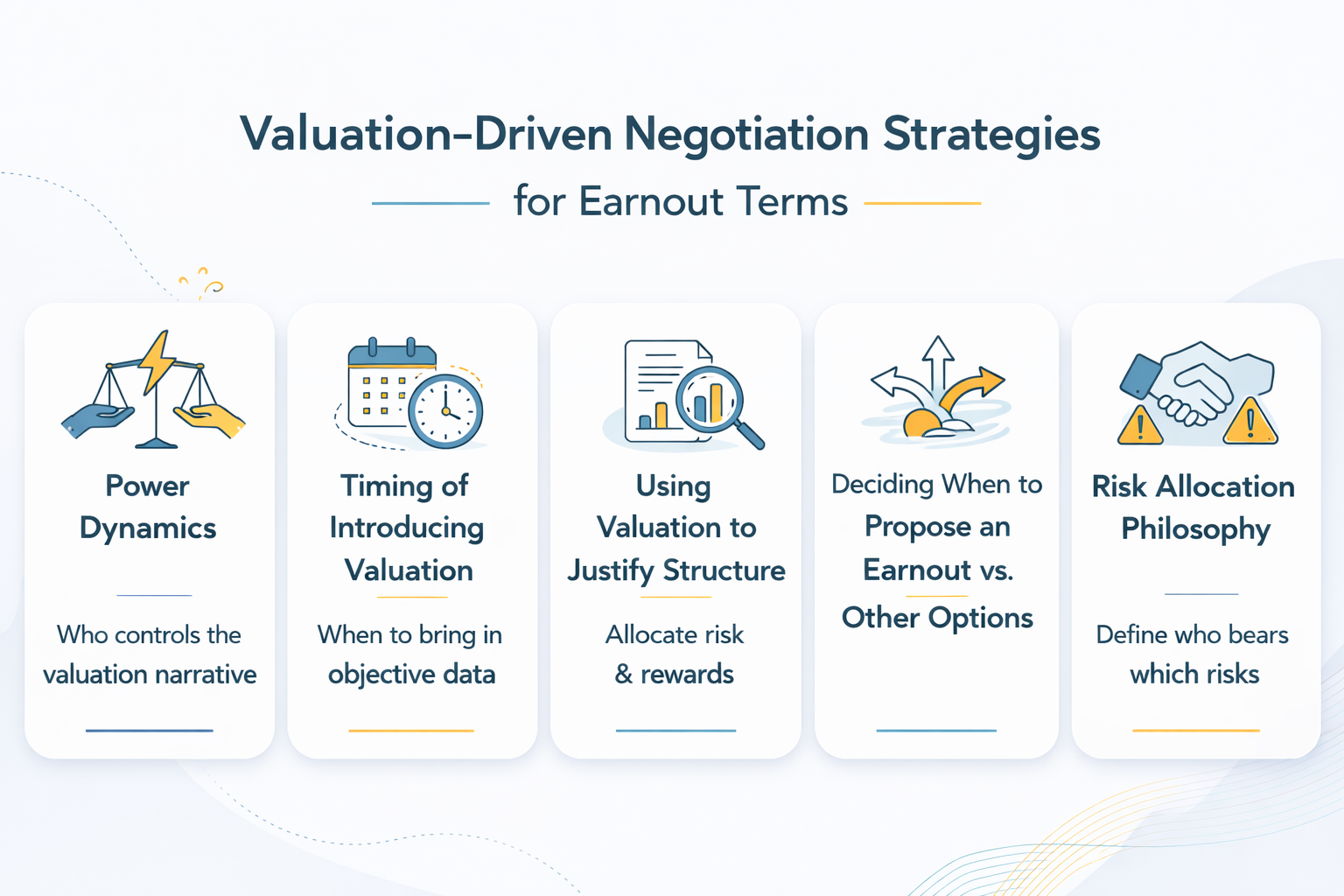
Valuation-Driven Negotiation Strategies for Earnout Terms

Valuation-Driven Negotiation Strategies for Earnout Terms

Earnouts are powerful tools for bridging valuation gaps, but their effectiveness depends on how and when valuation is introduced into the negotiation. At the decision stage, buyers and sellers must move beyond price haggling and focus on structuring deals that allocate risk, reward future performance, and protect both parties’ interests.

The following strategies help ensure valuation is used as a lever, not just a justification, in shaping the earnout and the overall deal.

  • Power Dynamics: The party that controls the valuation narrative often sets the agenda for the entire negotiation. Buyers may use valuation to justify conservative earnout structures, while sellers can leverage independent appraisals to support higher contingent payments or more favorable milestones. Recognizing who holds the information advantage, and when to shift it, can determine whether the earnout becomes a bridge or a battleground.
  • Timing of Introducing Valuation: Introducing a third-party valuation early in the process frames the negotiation around objective data, not just opinions. This approach reduces the risk of reactive concessions and helps both sides focus on structuring the earnout as a solution to uncertainty, rather than a last-minute compromise.
  • Using Valuation to Justify Structure: Rather than using valuation to explain why a deal should be priced a certain way, use it to justify the allocation of risk. For example, if the valuation highlights volatility in cash flow or client retention, structure the earnout to reward stability and penalize underperformance. If the valuation reveals strong recurring revenue, use that as a basis for shorter earnout periods or higher upfront payments.
  • Deciding When to Propose an Earnout vs. Price Adjustment vs. Seller Financing: Not every valuation gap should be bridged with an earnout. Sometimes, a price adjustment or seller financing is more appropriate, especially if the risk is tied to factors outside the seller’s control. Use the valuation to identify which risks are best addressed through contingent payments and which require a different approach.
  • Risk Allocation Philosophy: The most effective earnout structures are those that clearly define who bears which risks, and why. Use the valuation to map out risk factors—such as market volatility, client concentration, or operational dependencies—and allocate them transparently in the deal terms. This clarity reduces the likelihood of disputes and ensures both parties are incentivized to achieve the earnout.

Read Next:

How to Use Valuation to Negotiate Earnout Terms

A well-executed valuation provides the foundation for every critical decision in structuring an earnout. When both parties rely on an independent, data-driven appraisal, negotiations shift from subjective debate to objective problem-solving.

Anchoring Earnout Negotiation with Independent Valuation

An independent business valuation establishes a neutral, data-driven baseline that both buyer and seller can use to guide negotiation strategy. When parties reference a third-party appraisal, they gain a shared framework for discussing value drivers, risk factors, and future performance assumptions. This clarity helps prevent negotiations from stalling over subjective opinions or emotional price anchors.

To use valuation as a negotiation anchor, request a formal report early in the process and ensure both sides review the underlying assumptions, such as revenue composition, client retention, and normalized EBITDA.

Advisor Legacy’s Business Valuation Service delivers a comprehensive, lender-ready analysis that supports objective decision-making and strengthens your negotiation position. Use the valuation’s findings to justify specific earnout structures, such as tying milestones to recurring revenue or setting thresholds based on historical growth rates.

When disagreements arise, refer directly to the valuation’s documented methodology to resolve differences and keep negotiations focused on facts.

Choosing the Right Earnout Metrics and Performance Targets

Intro: Selecting the right performance metrics is critical to ensuring the earnout is both achievable and aligned with the business’s underlying value drivers. The most effective metrics are those that are objectively measurable, resistant to manipulation, and directly tied to the factors identified in the valuation.

Metric Pros/Cons How to Measure Dispute Risks When to Use
EBITDA Aligns with cash flow, common in M&A; can be manipulated by accounting Audited financials, GAAP compliance Accounting policy changes, add-backs When profitability is the key driver
Revenue Simple, hard to manipulate, seller-friendly Sales reports, CRM data Top-line focus may ignore costs When growth is the main concern
Client Retention Directly tied to recurring value, aligns with advisory business models Client lists, attrition analysis Disputes over client classification When relationships drive value
AUM Reflects advisory scale, easy to track Custodian statements, audit trails Market volatility, asset flows When assets are the main value driver
Milestones Tied to specific business events (e.g., new product, regulatory approval) Board minutes, third-party reports Ambiguity in milestone definition When non-financial targets matter


Read Next: Earn-Out Agreements for Financial Advisors: How to Structure Deals and Allocate Risk

Structuring Earnout Provisions in the Purchase Agreement

Translating valuation insights into enforceable contract terms requires a disciplined approach to defining milestones, payment schedules, and contingencies. Each element of the agreement should be mapped directly to the risks and value drivers identified in the valuation.

  • Tie earnout payments to valuation findings: Use the valuation’s key drivers (e.g., recurring revenue, client demographics) to set performance targets that are both realistic and defensible. This reduces the risk of disputes over whether the earnout was achievable.
  • Set clear milestones and define the length of the earn-out period: Establish specific, time-bound milestones (e.g., 24 months of EBITDA targets) that reflect the business’s operating cycle and the risks identified in the valuation.
  • Define payment terms and contingencies: Specify how and when payments will be made, including any holdbacks, escrow arrangements, or acceleration clauses in the event of early achievement or change of control.
  • Address accounting decisions and GAAP compliance: Clearly state which accounting standards will govern the calculation of earnout metrics, and require consistency with past practices to prevent manipulation.
  • Include dispute resolution mechanisms: Build in expert determination or arbitration clauses to handle disagreements over calculations, and outline escalation paths for unresolved issues.

Advisor Legacy’s Deal Support Service provides hands-on guidance for drafting, negotiating, and finalizing purchase agreements that reflect your valuation findings and protect your interests throughout the transaction.

By leveraging expert support, you can ensure that milestones, payment terms, and dispute resolution mechanisms are clearly defined and aligned with your strategic objectives.

Avoiding Post-Closing Disputes with Valuation-Driven Earnouts

Earnout disputes are among the most common sources of post-closing conflict in advisory M&A. These conflicts often stem from ambiguous contract language, inconsistent application of accounting standards, or misalignment between the earnout structure and the business’s actual performance.

By grounding the earnout in a well-documented valuation and proactively addressing potential points of friction, advisors can dramatically reduce the risk of disputes and protect deal value.

Using Valuation as a Neutral Reference Point

A valuation report that is referenced directly in the purchase agreement provides a shared factual baseline for both parties. To make this actionable, include the valuation’s key assumptions, methodologies, and any scenario analysis as exhibits or appendices. This documentation allows both sides to resolve disagreements by referring to agreed-upon facts, rather than subjective interpretations or shifting market conditions.

Aligning Performance Metrics with Past Practices

Performance targets should be calibrated to the company’s historical results and validated business plans. Use trailing twelve-month data, client retention rates, or other recurring metrics from the valuation to set benchmarks that are both achievable and resistant to manipulation. When both parties agree on the basis for these targets, the risk of future disputes drops significantly.

Ensuring Calculation Methods Are Understood

Every calculation method, from EBITDA adjustments to revenue recognition, should be spelled out in the agreement. Require that all financial metrics be prepared in accordance with GAAP and consistent with the company’s past accounting policies.

Attach policy schedules and sample calculations to the agreement, and specify how extraordinary items or one-time events will be treated. This level of detail prevents confusion and closes loopholes that could be exploited after closing.

Setting Up Communication and Review Protocols

Establish a schedule for regular reporting and milestone reviews, with clear requirements for the format and timing of information delivery. Grant both parties audit rights and access to supporting documentation.

Define a process for raising and resolving concerns, including escalation to an independent expert if necessary. These protocols ensure transparency, build trust, and provide a framework for addressing issues before they escalate into formal disputes.

Read Next: Plan Your Business Exit: The 3–5 Year Timeline That Protects Value

Aligning Business Plans and Performance Metrics

For an earnout to succeed, the business plan and performance metrics must be tightly aligned with the valuation’s assumptions. This ensures that both parties are working toward achievable, measurable goals and that the earnout reflects the true economics of the business.

Checklist: Steps to Ensure Alignment

  • Review the valuation’s key assumptions and ensure they are reflected in the business plan and earnout targets.
  • Confirm that performance metrics are based on data sources and calculation methods agreed upon by both parties.
  • Validate that the business plan includes contingencies for market volatility, client attrition, and other risks identified in the valuation.
  • Schedule regular reviews to compare actual performance against earnout milestones and adjust as needed.

Read Next: Using a Valuation as a Business Planning Tool

When and How to Use Earnouts to Bridge Valuation Gaps

Earnouts are not a one-size-fits-all solution. They are most effective when used to bridge valuation gaps arising from uncertainty about future performance, market volatility, or differences in risk tolerance between buyer and seller. Recognizing when to use an earnout—and when to consider alternatives—is critical to making the deal work for both parties.

When the buyer and seller have fundamentally different views on the target company’s future, an earnout can serve as a tool to bridge those differences without forcing either side to accept an unfavorable price. However, if the risks are outside the seller’s control or the business is highly integrated post-closing, a price adjustment or seller financing may be more appropriate. Advisor Legacy helps clients evaluate these options and structure deals that maximize value while minimizing risk.

Read Next:

Legal, Accounting, and Practical Considerations

Legal and accounting issues can undermine even the most carefully structured earnout if not addressed in detail. Advisors must ensure that every aspect of the agreement is documented, enforceable, and consistent with both parties’ expectations.

This includes specifying accounting standards, documenting policy choices, and establishing clear record-keeping and dispute-resolution procedures.

Issue How to Address in Agreement Verification Steps
GAAP Compliance Require all calculations to follow GAAP and attach relevant standards as exhibits Obtain audited financials, review supporting notes, and schedules
Accounting Policy Choices Document all accounting policies and require consistency with historical practice Attach detailed policy schedules, require audit trails for any changes
Recordkeeping Mandate regular, transparent reporting and grant audit rights to both parties Schedule periodic reviews, provide access to all relevant records
Dispute Resolution Include expert determination or arbitration clauses with a defined scope and escalation paths Specify the process, timeline, and authority of the expert or arbitrator
Milestone Definitions Use precise, objective language and provide illustrative examples or sample calculations Attach sample calculations, board minutes, or third-party reports as evidence


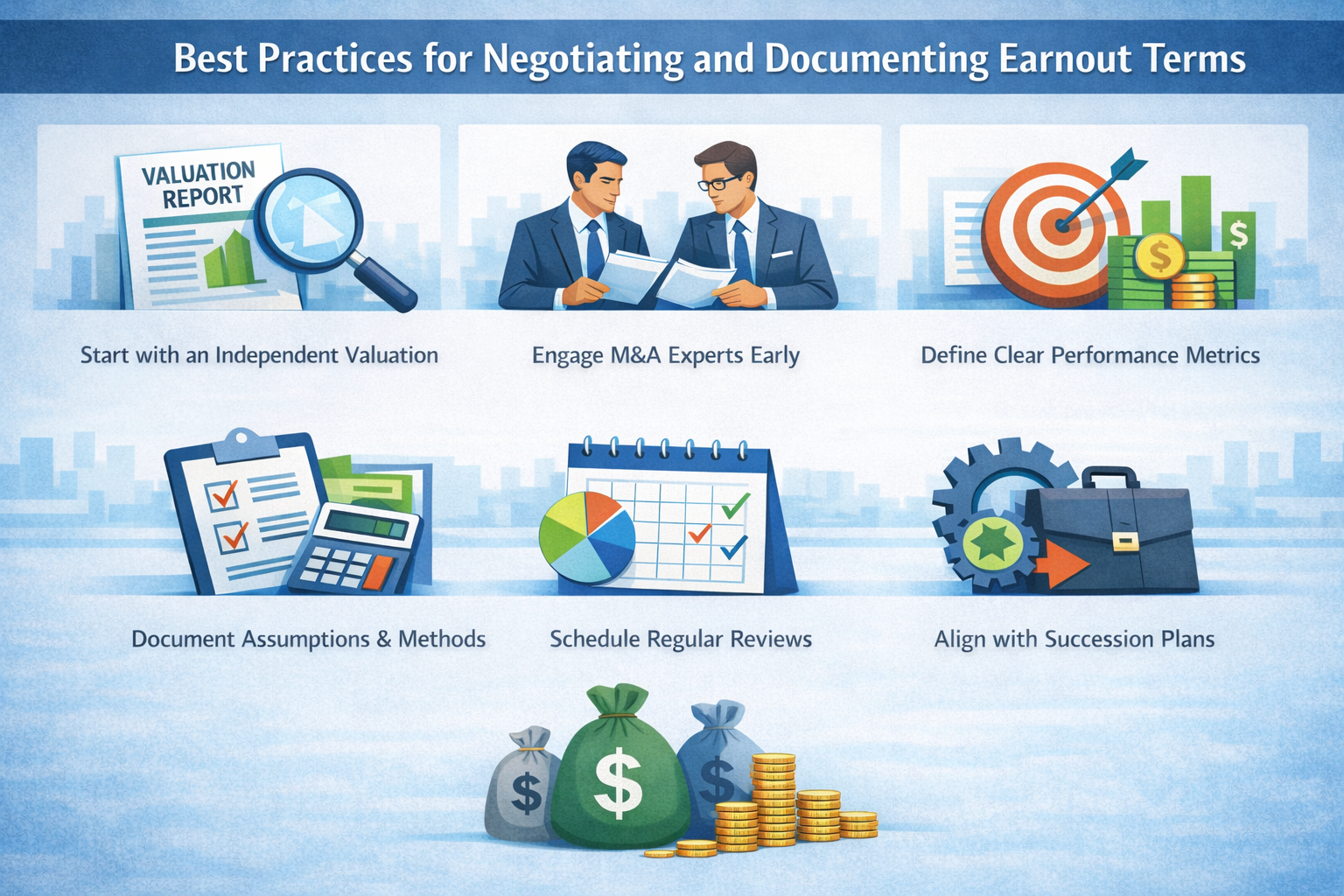
Best Practices for Negotiating and Documenting Earnout Terms

Best Practices for Negotiating and Documenting Earnout Terms-1

Earnout structures that stand the test of time are built on a foundation of clarity, objectivity, and proactive risk management. Advisors who follow these best practices can create agreements that are both defensible and adaptable, even as business conditions evolve.

  • Begin every negotiation with a formal, independent valuation: This sets a credible baseline for all discussions and helps both parties focus on objective criteria rather than subjective expectations.
  • Engage M&A attorneys and consultants at the earliest stage: Legal and financial experts can identify potential pitfalls, draft enforceable language, and ensure that the agreement reflects both parties’ intentions.
  • Select performance metrics that are measurable and aligned with value drivers: Choose metrics that are resistant to manipulation and directly tied to the business’s recurring revenue, client retention, or other key factors identified in the valuation.
  • Document every assumption, calculation method, and adjustment: Transparency in how targets are set and measured prevents confusion and builds trust between buyer and seller.
  • Establish a schedule for regular post-closing reviews and reporting: Ongoing communication helps surface issues early and keeps both parties aligned on progress toward earnout milestones.
  • Integrate the earnout structure with broader succession and transition plans: Ensure that the earnout supports long-term business continuity and leadership goals, not just short-term financial outcomes.

Read Next: Guide to Business Succession Planning Services: Ensure Leadership Continuity

Turn Valuation Clarity Into Earnout Leverage

A defensible valuation is the foundation for negotiating earnout terms that protect your interests, maximize deal value, and reduce the risk of costly disputes.

By using valuation as a negotiation lever, aligning business plans and performance metrics, and documenting every aspect of the earnout agreement, you can ensure a smooth transition and a successful outcome for both buyer and seller.

  • Anchor negotiations in objective valuation: Use third-party appraisals to justify risk allocation and structure earnouts that reflect true business value.
  • Align incentives and performance targets: Set milestones and metrics that are achievable, measurable, and consistent with the business’s operating realities.
  • Document everything: From calculation methods to dispute resolution protocols, clarity and transparency are your best defense against post-closing surprises.

You can move from negotiation to execution with the right partner guiding each step. Advisor Legacy provides independent business valuation, structured deal support, and practical experience across every stage of the advisory practice lifecycle. Our team helps financial advisors protect their legacy, strengthen deal value, and reduce risk throughout growth, transition, and succession.

Book a call with Advisor Legacy to access a defensible valuation and expert deal support. Gain the clarity and confidence needed to structure your next earnout for long-term success.

FAQs

What is an earnout in M&A?

An earnout is a contractual provision in an M&A deal where a portion of the purchase price is contingent on the future performance of the target company, typically measured by financial or operational milestones.

How does a business valuation impact earnout terms?

A business valuation provides an objective baseline for setting earnout targets, structuring payment terms, and allocating risk between buyer and seller. It helps ensure that earnout metrics are realistic and defensible.

What are common earnout metrics?

Common earnout metrics include EBITDA, revenue, client retention, assets under management (AUM), and specific business milestones such as product launches or regulatory approvals. The choice of metric should align with the business’s value drivers.

How can earnouts help bridge valuation gaps?

Earnouts allow buyers and sellers to bridge differences in valuation expectations by tying a portion of the purchase price to the future performance of the business. This approach reduces upfront risk for the buyer and offers the seller the potential to receive additional payments if targets are met.

What causes earnout disputes?

Earnout disputes often arise from ambiguous contract language, inconsistent accounting practices, or misalignment between earnout targets and the business’s actual performance. Clear documentation and objective metrics are key to avoiding these conflicts.

How do you structure an earnout agreement?

Structuring an earnout agreement involves selecting appropriate performance metrics, defining clear milestones and payment terms, addressing legal and accounting considerations, and including dispute resolution mechanisms. Engaging valuation and deal support experts can help ensure the agreement is both enforceable and aligned with your goals.

About the Author: Todd Doherty

Todd Doherty serves as Vice President for Advisor Legacy, where he leads advisors through the full M&A lifecycle—readiness, valuation analysis, buyer/seller matching, due diligence, and post-close integration. With more than 15 years in senior roles at financial advisory firms and hands-on ownership experience, Todd brings an operator’s lens to every engagement. His writing focuses on practical ways to boost enterprise value, structure win-win deals, and avoid execution risk. Todd collaborates closely with the firm’s valuation, lending, and legal partners to help advisors make confident, data-driven decisions.

Subscribe

Receive timely articles, tip sheets, events, and more right in your inbox.

Using Valuation to Negotiate Earnout Terms in Advisory M&A Deals

Using Valuation to Negotiate Earnout Terms in Advisory M&A Deals

Earnouts have become a defining feature of advisory M&A, with recent industry data showing that 18% of private target acquisitions in the latest...

Read More
Valuation Insights for NextGen Financial Advisors Building Equity

Valuation Insights for NextGen Financial Advisors Building Equity

NextGen financial advisors are entering a period of unprecedented transition in the wealth management industry. According to InvestmentNews, a...

Read More
Using Valuation to Structure a Fair Financial Advisor Partner Buy-In

Using Valuation to Structure a Fair Financial Advisor Partner Buy-In

Internal partner buy-ins are increasingly central to succession strategies in financial advisory firms as founders plan exits and next-generation...

Read More